Fighting for Injured Riders — and Against the Bias They Face
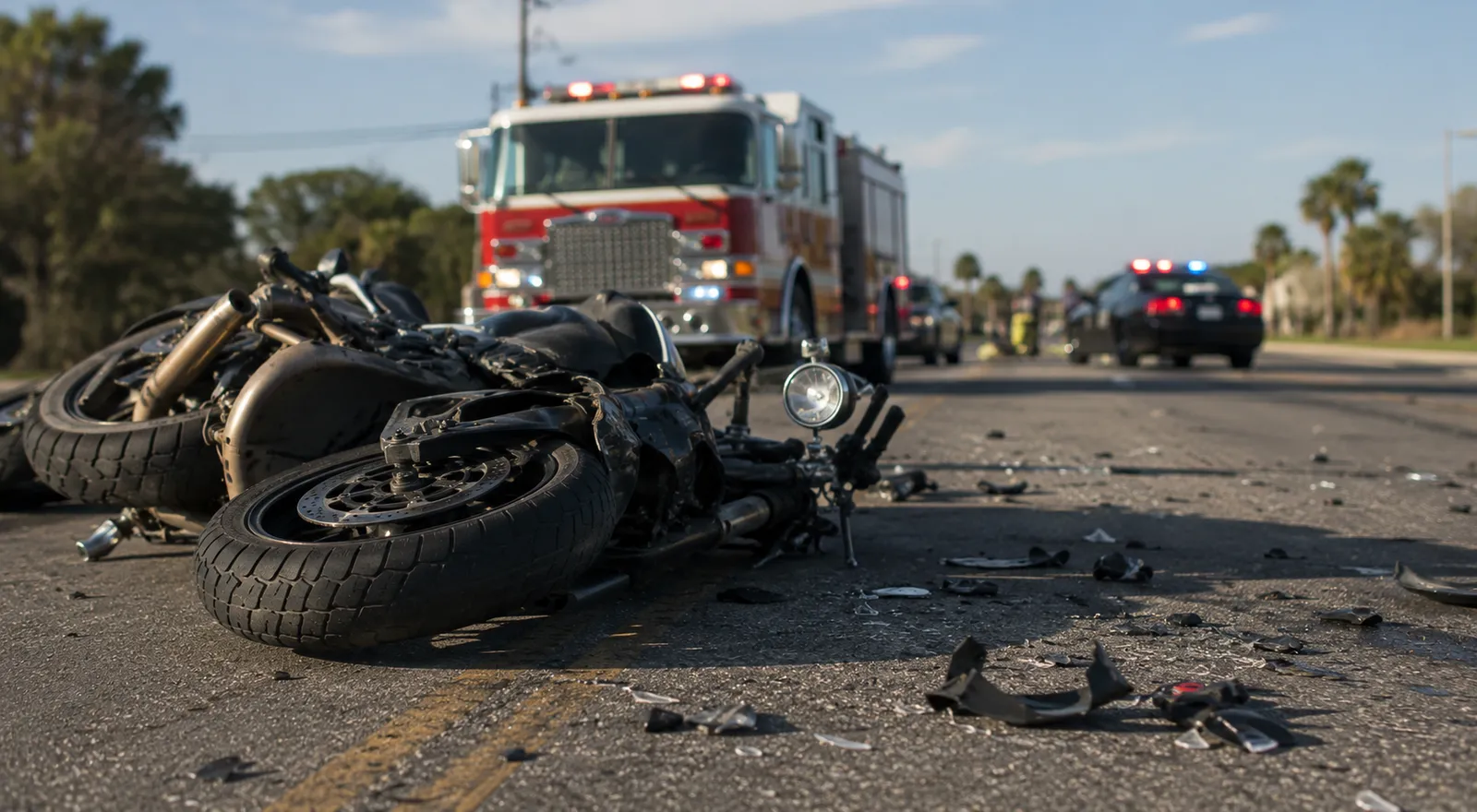
Motorcyclists know something other motorists rarely think about: on two wheels, someone else’s split-second carelessness becomes your emergency. A driver glances at a text, rolls through a left turn, or drifts into the next lane, and a rider doing everything right ends up sliding across asphalt. If that has happened to you or someone you love in Florida or Kentucky, Adam Clark Law is ready to stand in your corner.
Riders come into the claims process carrying a burden other victims do not: prejudice. Insurance adjusters, defense lawyers, and even some jurors start from the assumption that motorcyclists are reckless. That bias shows up as lowball offers, exaggerated fault arguments, and settlement valuations that quietly discount a rider’s suffering. We treat dismantling that prejudice as part of the case itself — proving through reconstruction, witness testimony, and hard data that our client was a trained, lawful rider who was put on the ground by someone else’s negligence.
Most serious motorcycle wrecks are visibility crashes. The turning driver who “looked but did not see.” The lane-changer who never checked the mirror a second time. The driveway pull-out timed as if the approaching headlamp did not exist. Human perception research explains why drivers underestimate the speed and distance of narrow oncoming vehicles — but explanation is not exoneration. The law required that driver to look and yield, and our investigations are built to show precisely when and where they failed to.
Helmet questions loom large in these cases, and the answer differs by state. Florida permits riders 21 and older to go without a helmet when they carry at least $10,000 in medical benefits coverage; Kentucky exempts most adult riders while mandating helmets for those under 21, permit holders, and new licensees. Either way, a lawful helmet choice is not a license to devalue a rider’s claim — and when insurers treat it as one, we press back with the facts.
The injuries riders suffer are of a different order than typical car-crash harm. Road rash that scars permanently. Shattered legs and wrists. Brain and spinal injuries that redraw the boundaries of a person’s life. Recovering the true value of those losses means working with treating physicians, life-care planners, and economists to project decades of future need — and refusing to negotiate from the first hospital invoice alone.
We also dig into every source of recovery. That can mean the at-fault driver’s liability policy, an employer’s coverage if the driver was working, uninsured and underinsured motorist coverage on your own policies, and claims against parties responsible for dangerous road conditions. Motorcycle cases are won in the details, and we sweat all of them.
Adam Clark Law offers every injured rider a free, confidential, no-obligation consultation, and we handle motorcycle cases on contingency — no fee unless we recover. You ride because it matters to you. When a negligent driver takes that from you, let us take the fight to them.
If you go down because of a negligent driver, these four steps protect you:
- Get evaluated immediately: Adrenaline masks injuries, and internal trauma and concussions often declare themselves hours later. Let EMS examine you at the scene and follow up with a physician the same day so your injuries are documented from hour one.
- Preserve the rider’s evidence: Keep your helmet, gear, and motorcycle exactly as they are — unrepaired and uncleaned. Damage patterns on a helmet, jacket, and fairing tell reconstruction experts a story no witness can. Photograph the scene, the car, its license plate, and your visible injuries.
- Say little, sign nothing: Give the responding officer the facts, then stop talking about fault — especially to the other driver’s insurer. Anything framed as an apology or a guess about speed will be weaponized against you under the fault rules of both states.
- Put a rider’s advocate on it: Text or call Adam Clark Law at (386) 264-4495. Early involvement lets us secure camera footage, download data, interview witnesses while memories are fresh, and confront anti-rider bias before it hardens into the insurer’s version of events.
Motorcycle Cases from the Hammock to the Interstate
Riders do not need a reason to know Palm Coast, but they usually have one: State Road A1A. The run through the Hammock’s oak canopy and along the oceanfront at Flagler Beach is one of the finest stretches of coastal riding in Florida, and it draws motorcycles every weekend of the year. Add year-round riding weather and a growing local riding community, and Flagler County carries far more two-wheeled traffic than a city this size might suggest.
Twice a year the volume multiplies. Bike Week and Biketoberfest push waves of rally traffic north from Daytona through Flagler County on US-1, A1A, and the interstate, and with those waves come the crash patterns that fill our files: left turns across oncoming bikes, drivers changing lanes into riders they never saw, and visitors navigating unfamiliar roads at dusk.
In town, the danger concentrates at the major intersections along Palm Coast Parkway and State Road 100, where turning drivers chronically misjudge an approaching motorcycle. Florida law put the duty to yield on the driver; our job is proving the breach with reconstruction, witness work, and data, rather than letting an adjuster write the story of your crash for you.
Every motorcycle case also carries an invisible defendant: bias. Adjusters, defense lawyers, and some jurors start from assumptions about riders, and those assumptions quietly shrink settlement offers. We treat the prejudice as an issue to be litigated — putting our client’s training, gear, and lawful riding into evidence as facts, not afterthoughts, and forcing the case to be decided on what actually happened.
Riders hurt in Flagler County face practical questions fast: which policies apply when the rider lives out of state, whether helmet choice affects the claim, how long treatment records need to run before anyone can talk numbers responsibly. We answer those in the first conversation. And if we take the case, we take it to win — in negotiation if possible, in a Bunnell courtroom if necessary.