Standing Up for Cyclists Hurt by Negligent Drivers
More people in Florida and Kentucky are riding bicycles than ever — commuting to work, training on the weekends, pedaling to school with their kids. The infrastructure has not kept pace. Bike lanes vanish at the exact intersections where riders need them most, painted lanes run through the door zones of parked cars, and long stretches of road offer no accommodation at all. Into that gap steps the impatient or distracted driver, and the consequences land entirely on the person not surrounded by two tons of steel. Adam Clark Law represents those riders.
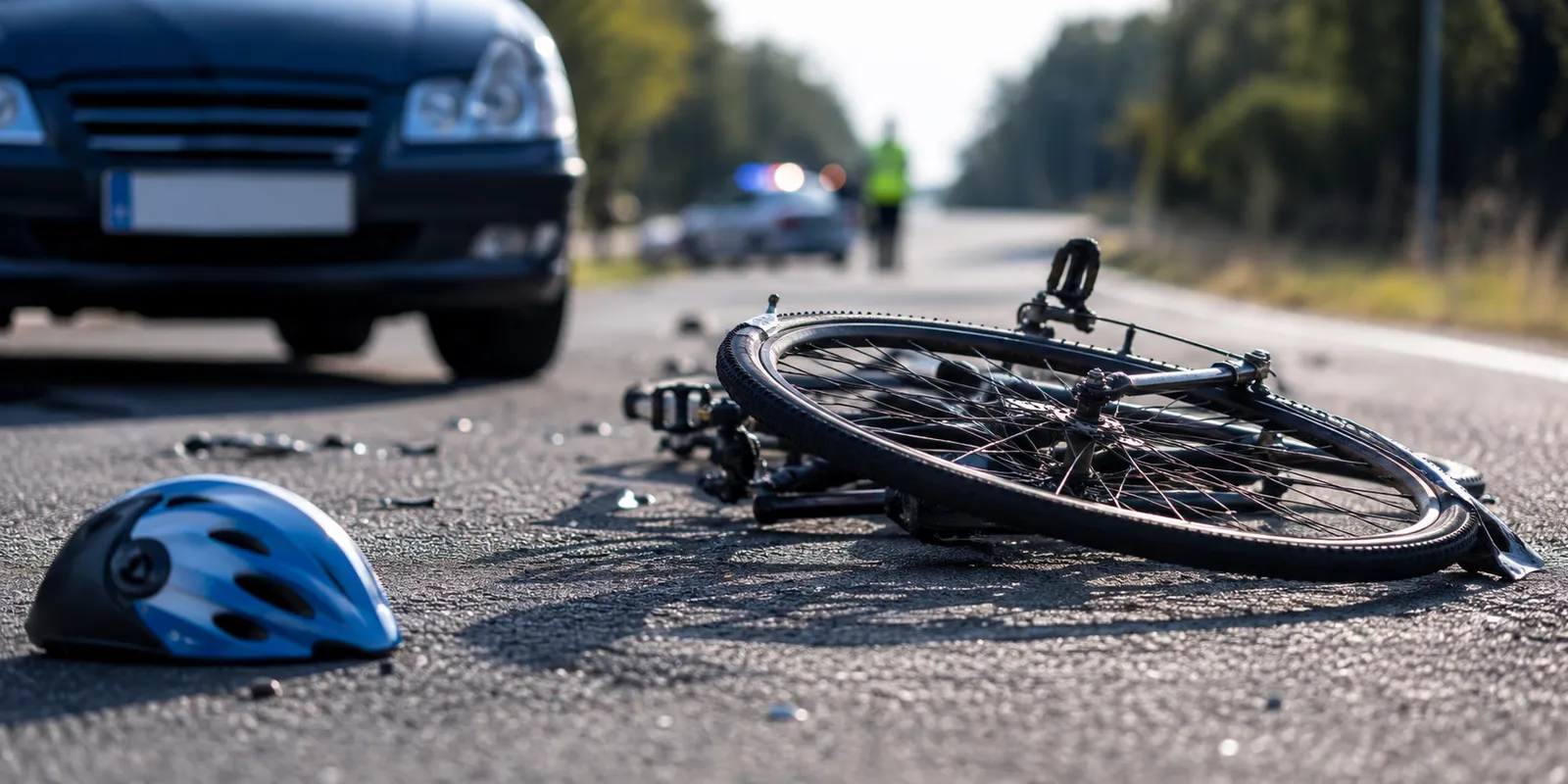
The physics of a bike-versus-car collision are brutally lopsided, and so are the dynamics that follow. A cyclist lying in the road with a fractured pelvis is in no position to gather evidence, dispute a driver’s self-serving account, or correct the officer who assumes the rider must have done something wrong. By the time the insurance company’s version of events is written, the cyclist has often been cast as the cause of their own catastrophe. Our work begins with refusing to let that narrative stand.
Driver-negligence patterns in these cases are well documented and repeat with grim regularity. Right hooks, where a passing motorist turns across the rider they just overtook. Left crosses through a cyclist’s right of way. Dooring in the parking lane. Punishment-close passes that violate the three-foot clearance the law demands. Drivers rolling out of driveways and strip-mall exits scanning only for cars. Each pattern has recognizable evidence signatures — impact points on the bicycle, damage locations on the vehicle, final rest positions — and we use reconstruction to match the physical proof to the true sequence of events.
The law is on the rider’s side more than most people, including many police officers and adjusters, seem to know. In both of the states where we practice, a bicycle is a vehicle, its rider holds the same rights as a motorist, and overtaking drivers owe passing clearance and turning drivers owe the right of way. Vulnerable road users do not forfeit protection because they chose two wheels; if anything, the duty of care owed to them by drivers of heavy, fast machines is more demanding, not less.
Modern cycling also produces modern evidence. GPS head units and watch data can establish a rider’s speed, position, and line in the seconds before impact. Cycling apps preserve route history. Increasingly, riders run cameras — and so do nearby homes and businesses. We move quickly to collect this material, along with the damaged bicycle itself, which we tell every client to preserve unrepaired, because bent forks and scraped components are testimony that cannot be cross-examined.
Insurance coverage in bike cases has hidden depth. Beyond the driver’s liability policy, an injured cyclist’s own uninsured/underinsured motorist coverage often applies even though no car of theirs was involved, and household policies can layer on top. Where a hit-and-run driver is never found, those coverages may be the entire recovery. We map every policy before recommending any settlement.
If a driver’s negligence put you on the pavement, contact Adam Clark Law for a free, confidential consultation. There is no fee unless we recover for you — and no obligation to do anything but learn where you stand.
Every injured cyclist should take these four steps after a crash:
- Involve law enforcement and EMS: Call 911 and insist a crash report be made, even if the driver urges you to handle it privately. Accept medical attention — cyclists frequently suffer fractures, internal injuries, and concussions that a surge of adrenaline temporarily hides.
- Document everything you can: Photograph the vehicle, its plate, the driver’s license and insurance card, the roadway, any bike lane markings, and your injuries. Get names and numbers for witnesses before they ride off into their own day.
- Preserve the machine and the data: Do not repair, wash, or discard your bicycle, helmet, or clothing, and do not delete or overwrite your ride files. Save the GPS activity, export any camera footage, and note which nearby buildings might have recorded the collision.
- Talk to a lawyer before the insurer calls: Text or dial (386) 264-4495 to reach Adam Clark Law. We deal with the adjusters, chase down the footage, and build the fault case — while you concentrate on getting back on the bike.
Bicycle Crashes in a City Built Around Its Trails
Palm Coast may be the most bikeable city on this stretch of the Florida coast. A web of multi-use paths shadows the major parkways, the Lehigh Trail follows an old rail corridor toward Graham Swamp, and a rider can cover a remarkable amount of the city without ever sharing a lane with a car. E-bikes have put even more residents of every age on those paths, and higher speeds raise the stakes at every crossing. Because no path network eliminates crossings — and crossings are where cyclists get hurt.
Every plaza driveway along Palm Coast Parkway, every side street intersecting the Belle Terre path, every trailhead crossing is a point where a turning or exiting driver must notice a rider and yield. Many never look. Out on the barrier island, the calculus changes: road cyclists riding A1A through the Hammock and Flagler Beach contend with narrow shoulders, coastal wind, and vacationers hunting for beach parking.
The injured rider is the worst-positioned person at the scene to protect their own claim. While you are being loaded into an ambulance, the driver is giving the officer an uncontradicted version of events. We counter that imbalance with physical evidence: the damage pattern on the bicycle, the impact points on the vehicle, GPS and ride-app data, and commercial camera footage — which we request immediately, because most systems record over themselves within days.
Florida law gives riders more protection than many drivers and adjusters realize, including full vehicle status on the road and a required three feet of passing clearance. Coverage often runs deeper than expected too: a cyclist hit by an uninsured or hit-and-run driver can frequently recover through uninsured motorist coverage on a household auto policy, and layered policies can multiply what is available. Before you accept anyone’s verdict on what your case is worth — especially an adjuster’s — let us look at the whole picture. The conversation costs nothing, and we represent riders hurt anywhere in Flagler County, from the neighborhood paths to the beachside.