Fighting for Injured Riders — and Against the Bias They Face
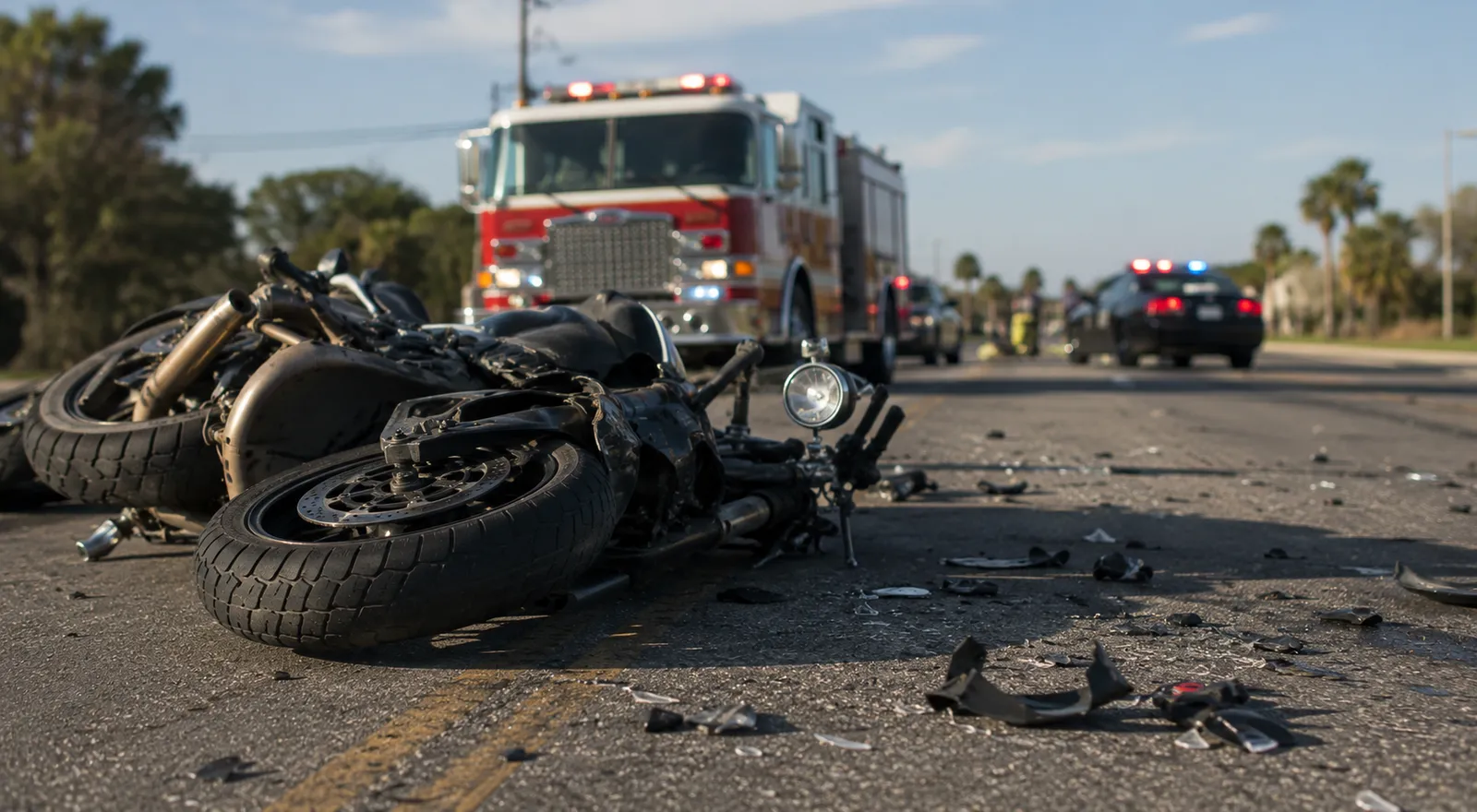
Motorcyclists know something other motorists rarely think about: on two wheels, someone else’s split-second carelessness becomes your emergency. A driver glances at a text, rolls through a left turn, or drifts into the next lane, and a rider doing everything right ends up sliding across asphalt. If that has happened to you or someone you love in Florida or Kentucky, Adam Clark Law is ready to stand in your corner.
Riders come into the claims process carrying a burden other victims do not: prejudice. Insurance adjusters, defense lawyers, and even some jurors start from the assumption that motorcyclists are reckless. That bias shows up as lowball offers, exaggerated fault arguments, and settlement valuations that quietly discount a rider’s suffering. We treat dismantling that prejudice as part of the case itself — proving through reconstruction, witness testimony, and hard data that our client was a trained, lawful rider who was put on the ground by someone else’s negligence.
Most serious motorcycle wrecks are visibility crashes. The turning driver who “looked but did not see.” The lane-changer who never checked the mirror a second time. The driveway pull-out timed as if the approaching headlamp did not exist. Human perception research explains why drivers underestimate the speed and distance of narrow oncoming vehicles — but explanation is not exoneration. The law required that driver to look and yield, and our investigations are built to show precisely when and where they failed to.
Helmet questions loom large in these cases, and the answer differs by state. Florida permits riders 21 and older to go without a helmet when they carry at least $10,000 in medical benefits coverage; Kentucky exempts most adult riders while mandating helmets for those under 21, permit holders, and new licensees. Either way, a lawful helmet choice is not a license to devalue a rider’s claim — and when insurers treat it as one, we press back with the facts.
The injuries riders suffer are of a different order than typical car-crash harm. Road rash that scars permanently. Shattered legs and wrists. Brain and spinal injuries that redraw the boundaries of a person’s life. Recovering the true value of those losses means working with treating physicians, life-care planners, and economists to project decades of future need — and refusing to negotiate from the first hospital invoice alone.
We also dig into every source of recovery. That can mean the at-fault driver’s liability policy, an employer’s coverage if the driver was working, uninsured and underinsured motorist coverage on your own policies, and claims against parties responsible for dangerous road conditions. Motorcycle cases are won in the details, and we sweat all of them.
Adam Clark Law offers every injured rider a free, confidential, no-obligation consultation, and we handle motorcycle cases on contingency — no fee unless we recover. You ride because it matters to you. When a negligent driver takes that from you, let us take the fight to them.
If you go down because of a negligent driver, these four steps protect you:
- Get evaluated immediately: Adrenaline masks injuries, and internal trauma and concussions often declare themselves hours later. Let EMS examine you at the scene and follow up with a physician the same day so your injuries are documented from hour one.
- Preserve the rider’s evidence: Keep your helmet, gear, and motorcycle exactly as they are — unrepaired and uncleaned. Damage patterns on a helmet, jacket, and fairing tell reconstruction experts a story no witness can. Photograph the scene, the car, its license plate, and your visible injuries.
- Say little, sign nothing: Give the responding officer the facts, then stop talking about fault — especially to the other driver’s insurer. Anything framed as an apology or a guess about speed will be weaponized against you under the fault rules of both states.
- Put a rider’s advocate on it: Text or call Adam Clark Law at (386) 264-4495. Early involvement lets us secure camera footage, download data, interview witnesses while memories are fresh, and confront anti-rider bias before it hardens into the insurer’s version of events.
Motorcycle Crashes in a City Built for Riders
No city in Florida is more closely identified with motorcycling than Daytona Beach. Bike Week each spring and Biketoberfest each fall fill Main Street, A1A, and every road in between with riders from across the country, and the season here never really ends — the same warm weather that draws visitors keeps local riders on US-1, International Speedway Boulevard, and the Ormond Scenic Loop all year long.
That rider volume shapes how crashes happen. During the rallies, the event corridors are saturated: drivers unfamiliar with the area turn left across oncoming bikes, pull out of hotel and bar driveways along Atlantic Avenue into a rider’s path, and merge without a second mirror check in stop-and-go beachside traffic. The rest of the year, the pattern shifts to the classic visibility failures — left turns, lane changes, driveway pull-outs — on US-92, Nova Road, US-1, and the interstates. The most seriously hurt riders are typically transported to Halifax Health Medical Center, the region’s trauma center, and an insurance adjuster is often working the file before the family has left the waiting room.
Florida’s insurance law hits riders especially hard. The state’s no-fault system leaves motorcyclists out: PIP does not cover a rider, so the medical bills arrive with no no-fault cushion, and recovery depends on the at-fault driver’s bodily-injury coverage — which Florida does not require most drivers to carry — and on the rider’s own uninsured motorist protection. Insurers compound the problem by leaning on old anti-motorcyclist bias to inflate a rider’s share of the fault. Our job is to shut that down with evidence: scene documentation, reconstruction, witness accounts, and the data that fixes speeds and sight lines.
Motorcycle cases arising here are filed in the Circuit Court for Volusia County, within Florida’s Seventh Judicial Circuit. Our office on Historic Live Oak Avenue sits a block from the courthouse, and we represent local riders and visitors alike — including out-of-state riders injured during Bike Week or Biketoberfest whose Florida cases move forward after they have gone home. Either way, you deal directly with your attorney by call or text, and there is no fee unless we win.