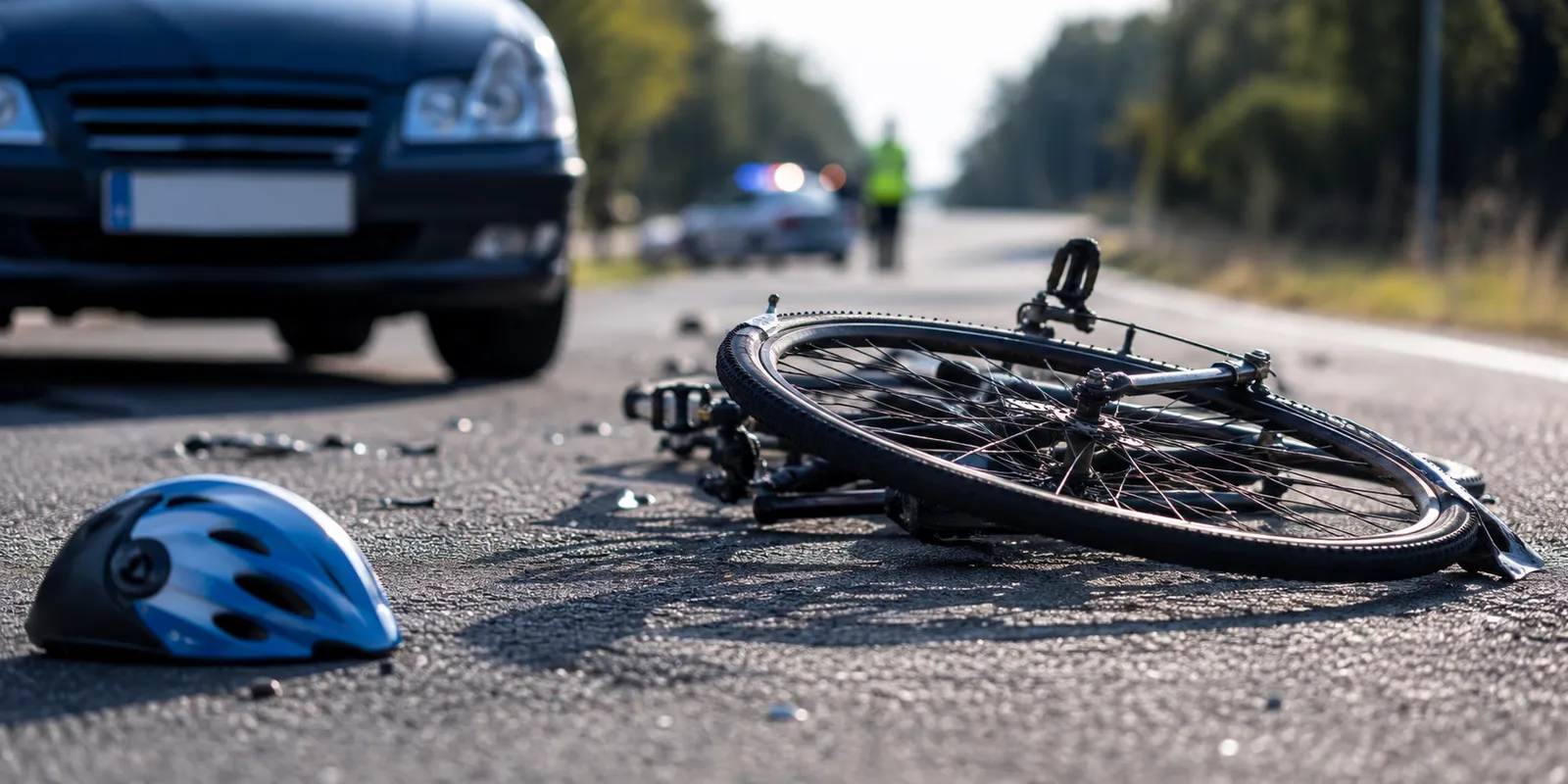
Standing Up for Cyclists Hurt by Negligent Drivers
More people in Florida and Kentucky are riding bicycles than ever — commuting to work, training on the weekends, pedaling to school with their kids. The infrastructure has not kept pace. Bike lanes vanish at the exact intersections where riders need them most, painted lanes run through the door zones of parked cars, and long stretches of road offer no accommodation at all. Into that gap steps the impatient or distracted driver, and the consequences land entirely on the person not surrounded by two tons of steel. Adam Clark Law represents those riders.
The physics of a bike-versus-car collision are brutally lopsided, and so are the dynamics that follow. A cyclist lying in the road with a fractured pelvis is in no position to gather evidence, dispute a driver’s self-serving account, or correct the officer who assumes the rider must have done something wrong. By the time the insurance company’s version of events is written, the cyclist has often been cast as the cause of their own catastrophe. Our work begins with refusing to let that narrative stand.
Driver-negligence patterns in these cases are well documented and repeat with grim regularity. Right hooks, where a passing motorist turns across the rider they just overtook. Left crosses through a cyclist’s right of way. Dooring in the parking lane. Punishment-close passes that violate the three-foot clearance the law demands. Drivers rolling out of driveways and strip-mall exits scanning only for cars. Each pattern has recognizable evidence signatures — impact points on the bicycle, damage locations on the vehicle, final rest positions — and we use reconstruction to match the physical proof to the true sequence of events.
The law is on the rider’s side more than most people, including many police officers and adjusters, seem to know. In both of the states where we practice, a bicycle is a vehicle, its rider holds the same rights as a motorist, and overtaking drivers owe passing clearance and turning drivers owe the right of way. Vulnerable road users do not forfeit protection because they chose two wheels; if anything, the duty of care owed to them by drivers of heavy, fast machines is more demanding, not less.
Modern cycling also produces modern evidence. GPS head units and watch data can establish a rider’s speed, position, and line in the seconds before impact. Cycling apps preserve route history. Increasingly, riders run cameras — and so do nearby homes and businesses. We move quickly to collect this material, along with the damaged bicycle itself, which we tell every client to preserve unrepaired, because bent forks and scraped components are testimony that cannot be cross-examined.
Insurance coverage in bike cases has hidden depth. Beyond the driver’s liability policy, an injured cyclist’s own uninsured/underinsured motorist coverage often applies even though no car of theirs was involved, and household policies can layer on top. Where a hit-and-run driver is never found, those coverages may be the entire recovery. We map every policy before recommending any settlement.
If a driver’s negligence put you on the pavement, contact Adam Clark Law for a free, confidential consultation. There is no fee unless we recover for you — and no obligation to do anything but learn where you stand.
Every injured cyclist should take these four steps after a crash:
- Involve law enforcement and EMS: Call 911 and insist a crash report be made, even if the driver urges you to handle it privately. Accept medical attention — cyclists frequently suffer fractures, internal injuries, and concussions that a surge of adrenaline temporarily hides.
- Document everything you can: Photograph the vehicle, its plate, the driver’s license and insurance card, the roadway, any bike lane markings, and your injuries. Get names and numbers for witnesses before they ride off into their own day.
- Preserve the machine and the data: Do not repair, wash, or discard your bicycle, helmet, or clothing, and do not delete or overwrite your ride files. Save the GPS activity, export any camera footage, and note which nearby buildings might have recorded the collision.
- Talk to a lawyer before the insurer calls: Text or dial (386) 264-4495 to reach Adam Clark Law. We deal with the adjusters, chase down the footage, and build the fault case — while you concentrate on getting back on the bike.
Bicycle Crashes on A1A, the Beachside, and Volusia County Roads
Cyclists in the Daytona Beach area ride some of the most scenic pavement in Florida — and some of the least forgiving. A1A traces the beachside from Ormond Beach through Daytona Beach Shores toward Ponce Inlet, lined for miles with hotel, condo, and beach-approach driveways where turning drivers cross a rider’s line without ever truly looking. Beach Street carries commuters and casual riders along the Halifax River through downtown. Club and training rides head north to the Ormond Scenic Loop & Trail, and the bridges tying the mainland to the beachside squeeze bicycles and impatient drivers into the same narrow lanes.
The negligence patterns we see locally are depressingly consistent. Right hooks at the strip-plaza entrances along US-1 (Ridgewood Avenue). Drivers cutting across Atlantic Avenue bike lanes to reach a beach ramp or hotel entrance. Motorists rolling driveway exits while scanning only for cars. And every winter and every event weekend brings a wave of visiting drivers who do not know these roads and are hunting for parking, not watching for bicycles.
Florida law protects riders more strongly than many drivers — and some adjusters — seem to realize. A bicycle is a vehicle under state law, with full rights to the road. Passing drivers must leave at least three feet of clearance and may lawfully cross the center line to do so. Sidewalk riding, common on the beachside, is generally legal too, with the rights and duties of a pedestrian. When a driver’s violation of these rules puts a cyclist on the pavement, that violation becomes the backbone of the negligence case.
Expect the insurer to test Florida’s comparative-fault rules anyway. Under the state’s modified system, a cyclist found more than 50 percent at fault recovers nothing, so adjusters reach for the usual accusations: no lights, wrong lane position, “darted into traffic.” We answer with proof — the damage pattern on the bicycle, GPS ride files, witness statements, and footage pulled from the cameras that blanket the beachside corridors before it is overwritten.
Bicycle injury cases arising in the Daytona Beach area are filed in the Circuit Court for Volusia County, part of Florida’s Seventh Judicial Circuit — a block from our office on Historic Live Oak Avenue. Your consultation is free, you speak directly with your attorney, and there is no fee unless we win.